Search This Blog

Saturday, January 1, 2011

Paella Fried Rice


This is a fusion between Spanish seafood paella and Chinese fried rice. I use soffrito (see below), saffron and seafood stock to flavour the short grain rice. The paella rice is cooked without the seafood and set aside, together with its socarrat, the toasted, crusty base layer of rice. The seafood (prawns, squid, mussels) are cooked seperately.

The usual ingredients for Chinese fried rice are prepared separatedly... peas, chopped fried egg strips and sausage. Here I use Hua Tiao pork liver sausage in place of chorizo, stir fried over medium heat. The paella rice is then stir fried in a little grape seed oil (for it high smoke point) over high heat to achieve the 'wok-hei' in Chinese stir fry.

To serve, arrange the squids, prawns, mussels around the fried rice and garnish with crispy, fried shallots.


Soffrito is a based ingredients in many Spanish dishes, in particular, paella.  It is prepared with tomato, onion and olive oil.  Slice the tomatoes in half. Remove seeds and place over a grater to retrieve the puree. Discard skins.

Heat oil over medium low heat. Add onions, sugar, salt and cook, stirring until the onions are soft and golden brown. You want the onion to caramelise but not burn. This may takes up to 45 mins.  Stir in the tomato puree, paprika, bay leaves and cook for a further 20 minutes over medium heat. Soffrito is ready when the tomato has broken down and deeped in colour and the oil has separated from the sauce.


Ingredients

1 kg medium size tomato
1 kg yellow onion, finely chopped
1 tsp sugar
1 tsp salt
I tsp sweet smoke paprika
3 bay leaves
150 ml olive oil

Monday, December 27, 2010

Roast Chicken with Sumac and Lemon

My good friend, Luis Calvo Alonso brought me a packet of the exotic sumac spice from Istanbul. I decided to adapt a recipe from Yotam Ottolenghi. I do not have za'atar, which is a blend of spices usually consisting of thyme, sumac, oregano and toasted sesame seed.  I made my own blend with ajwain (a thyme flavored seed), sumac and white sesame seeds instead. The chicken is quartered and seasoned overnight, before it is roasted together with the marinate in a casserole at 200 deg C.  Before serving, it is garnished with roasted pine nuts, parsley and a drizzle of olive oil.


Ingredients
1 large free-range chicken, divied into quarters
2 red onions, thinly sliced
2 garlic cloves, crushed
4 tablespoons olive oil, plus extra for drizzling
1 1/2 teaspoons ground allspice
1 teaspoon ground cinnamon
1 tablespoon sumac
1 lemon, thinly sliced
200ml chicken stock
1 1/2 teaspoons salt
1 teaspoon ground black pepper
2 tablespoons za’atar
20g butter
50g pine nuts
4 tablespoons chopped flat leaf parsley

Saturday, December 25, 2010

Chilled Black Garlic Noodles with Lumpfish Caviar


An invitation to a degustation lunch at Gordon's Grill, Goodwood Park Hotel, gave me the opportunity to taste the much hyped Cold Japanese Noodles with caviar.  I decided to creat my own version with home made black garlic noodles. The noodles takes less than a minute in boiling water to reach the right texture. For the sauce, I used ponzu, tare sauce, mirin, olive oil and truffle oil. The noodle is mixed in the sauce and chilled. For garnish, finely chopped chives, seaweed and half a teaspoon of red Lumpfish caviar. The slighty salty flavour of caviar with a nice crunchy pop combines well with the aroma of truffles to give this chilled black garlic noodle a surprising delicious taste.

You can buy black garlic here.

Friday, December 24, 2010

Mussel Escabeche


This is a rustic Spanish tapas dish that can be prepared in advance. It is served chilled and perfect with a glass of beer or wine and crusty bread. I used the pacific black mussels for its meatiness. In a medium pot, add 60 ml of white wine, bay leaves and mussels. Cover and cook over medium heat.  As soon as mussels open, remove them. When cool, remove mussels from shells.  Strain and reserve the cooking liquid.

To make escabeche, heat olive oil, shallot, garlic, pinch of salt and saute until shallot is soft. Add vinegar, peppercorns, paprika, and remaining wine and simmer for about 5 minutes. When the escabeche is cool, stir in the mussels. Pour into a shallow dish, cover and refrigerate overnight.

NB: For a more spicy escabeche, add 1 dried chilli when making the escabeche.

Serves 4 Tapas Rations
750 g mussels
100 ml white wine
40 ml white wine vinegar
2 bay leaves
20 ml extra virgin olive oil
1 medium shallot, finely chopped
1 garlic clove, finely chopped
1/4 tsp smoked paprika
5 black peppercorns
Pinch of salt
Optional: 1 dried red chilli


I created a  mussel escabeche bruschetta with baked bell peppers (marinated in herbs infused olive oil) and black garlic over a slice of home made foccacia.

Saturday, November 13, 2010

Chiprones con Cebolla Caramelizada

The sweetness from the caramelized onion make this baby squid tapa very delicious. I added crispy smoked bacon to give the texture an added contrast. When making the caramelized onion in olive oil, make sure you continue to stir it to prevent it from burning. Add bay leaf, a dried chilli to give the onion extra flavor. When the caramelized onion is ready, stuffed them into the baby squid and pan fried till done. You may add piquillo pepper if you like. Wine is added to deglaze and make the sauce.

Baby Shrimp Kakiage with Parmesan

Kakiage is a Japanese term for mixed tempura. Parmesan cheese adds another dimension of flavor to this crispy kakiage. Besides the fresh baby shrimps, I added diced black garlic, red chilli and yellow onion. I adapted the recipe from Nobu Matsuhisa, but decided to use a mixture of rice flour and plain flour instead of the usual tempura flour. For extra crisp, I used ice cold beer for the batter.

Sunday, October 31, 2010

Duck Leg Confit with Mixed Fruit Garnish


This is one of my favourite dishes as it is so flavorfully delicious. The meat literally falls off the bones, the skin is thin and crispy and you do not get the fattiness one would associate with duck skin.

Almost all French recipes for duck leg confits are seasoned with thyme. I could not get fresh thyme in the days I was to make the dish. So I used Ajwain seeds instead. Ajwain, a thyme flavored seed of the Carom family, is common in Indian and Middle Easter cuisine. I also added crushed bay leaves, chopped parsley, black pepper and of course, sea salt. The legs are marinated in the mixture for 24 hours. I cooked the duck legs in its own fat at 85 deg C for 4 hours, with skin side up, adding a bulb of garlic and and one or two cloves.

For the mixed fruit garnish, I use fresh apples and dried prunes, golden raisins, wolfberries, white wine, and crushed almonds. I simmer the dried fruits in fresh orange juice and a little chicken stock before adding diced apple cubes, without over cooking it to retain some crunchiness. The roasted and crushed almonds are added last.

Friday, October 29, 2010

Australian Wagyu Ribeye with Mustard Flavored Watercress Salad


For this dish, I want a twist between a sweet-tart flavor of a Japanese steak sauce and a tangy mustard dressing for the watercress salad.

The wagyu steak is simply seasoned with salt and pepper, then sous vided at 59 deg C for 45 min. I added a dash of smoked paprika before grilling it on a hot cast iron skillet for a minute each side. I reckoned a minute is a bit too long for a tender wagyu steak about 20mm thick. While the meat tasted great, it could have been better if I have reduced the grilling to just 30 seconds each side.

For the watercress dressing, I use a homemade Dijon mustard, cider vinegar, honey and extra virgin olive oil. The mustard was made a couple of weeks ahead from black and yellow mustard seeds, mustard powder, yellow onion, garlic, dry white wine, worcestershire sauce, salt, vinegar, sugar and a dash of ground mace, all spice, tumeric, white pepper and cinnamon.

To serve, I added shiitake mushrooms sauteed with a little sea salt and garlic.

Humphead Wrasse with Fennel Salad

I bought a kilogram of frozen Humphead Wrasse at the airport in Sabah, Borneo. I was intrigued to find out how it tastes like. The fish was seasoned with salt, pepper and tumeric, dusted with flour and then pan fried in a nonstick skillet. As it turned out, the meat was firm, between that of monkfish and grouper.

Firm white fish and fennel is a classic combination. Here, I made the baby fennel salad with a mandoline grater, seasoned it with orange juice, white wine vinegar and olive oil. I added a few crunchy baby tomatoes. For the sauce, I used lemon juice, mirin, chilli, garlic, and soy sauce to give it a tangy hot and sour flavour.

Sunday, September 19, 2010

Suquet de Mero con Almejas

This is a Catalan fish stew that I picked up from Jose Andres. His recipe uses Scorpion fish which is not available here. I replace it with golden grouper which has a tasty, firm, white fresh. The stock is prepared from fresh fishes, shells of prawns, celery, carrot, onions and garlic. I added a few slices of ginger to remove the fishiness.

For the stew, diced, parboiled russet potato is sauteed in olive oil before adding tomato pulp, a pinch of saffron, sugar and pimenton (Spanish smoke paprika). Strained stock is then added to the pot, just enough to cover the slice of fish and cook for about five minutes. The clams are then added.

Mash a garlic clove with salt, parsley and a piece of potato from the stew and add to the pot. Serve.

Sardine Bruschetta

It is rare to find fresh sardines in the tropics. When I saw them in the market, I wasted no time in taking away 2.5 kilos of the delicate fish. For the sardines, I use a Japanese marinate made from mirin, sake, soy sauce, sugar and rice vinegar. The fish is lightly powdered with plain flour, then pan fried in medium heat in a non stick pan. Layer and layer of the marinate is applied until the skin appear to have a shiny glaze.


It is easy to debone sardine. Once the head and guts are removed, use a paring knife to free up on half of the meat from the bone. When the bone is exposed, you can lift it up with your fingers and pulling slowing towards the tail end.


Monday, September 13, 2010

Mooncake with Black Garlic and Chestnut


It is the mid-autumn festival and I decided to have a go at making snow skin mooncake. Almost all mooncakes available commercially has a high sugar content, usually made with lotus paste, and fairly unhealthy when paired with salted egg yolk. I decided to create my own blend, pure chestnut puree with black garlic paste, some olive oil and butter, without adding any crystalline sugar. Fermented black garlic has none of the garlic sharpness, a natural sweetness with a hint of balsamic. I rely on this for the overall taste. I would say, this mooncake has the highest antioxidant and polyphenol level in the market. As it turns out, bonishimo!

Tuesday, August 31, 2010

Saffron Poached Pear with Mint Custard

Saffron and pear might seem a strange combination, but it works! A pinch of saffron in the poaching liquid is all that is needed to give it a golden yellow colour. After simmering in the sugared liquid for 20 to 25 minutes, leave the pear to cool in the liquid for half a day. The longer it is left in the liquid, the more intense is the colour.

For the custard sauce, I add a few pods of crushed cardamon and finely chopped fresh mint leaves to give a twist to the flavour. Before serving, dust the pear with caster sugar, and caramelise it with a chef's blowtorch.

Monday, August 23, 2010

Cuttlefish Mouth with Grilled Chilli and Wasabi Sauce

I bought a 2.7kg cuttlefish and it has a mouth the size of a ping pong ball. The only place in the world that people eat squid mouth is in Vietnam. In keeping with my attitude of not wasting food, I decided to vacuum poach it at 65 deg C for 45 min. To my surprise, it has a crunchy texture, akin to that of eating raw geoduck clam. I served it with wasabi soy sauce and skinless baked red chilli.

Ice Filtered Consomme of Pork with Shrimp

This crystal clear consomme has a really intense flavour as a result of ice filtration. It is an amazing technique discovered by German scientist Gerd Kloeck. I learn about the process from Blumenthal's In Search of Perfection cookbook. Several steps are crucial to success. There must be enough gelatin in the stock to make it gel, and it should be frozen only after it has gelled. The stock is then thawed very slowly in the refrigerator over a filter paper or cheesecloth. The thawing may takes up to 36 hours. If it thaws too quickly at warmer temperature, the fat will melt back into oil droplets and fall into the consomme, making it cloudy.

The consomme is served hot, with buna shimeji mushrooms, wolfberries and a poached jumbo shrimp.

Tuesday, August 17, 2010

Rack of Pork Loin with Coffee and Peach Sauce


I adapted this recipe from the Fat Duck Cookbook. I attempted the pork loin with the rib bone attached, which was not described in the book. The meat was tender and the bone came out clean. But I wished it could be a lot juicier. I used the same SV parameters for pork belly, at 60 deg C for 36 hours. I should have done it for a maximum of 4 hours. Nonetheless, I did managed to get the skin crackling.

For the accompaniment, I have poached nectarines (peach wasn't available) in thick sauce made with peach and apple juice, black coffee, sherry vinegar, mirin and soy sauce. The bitterness of black coffee counters the sweetness of the juices and mirin.

Sunday, August 8, 2010

Gambas al Ajillo Negro

Gambas al Ajillo is a classic Spanish cuisine often served as a tapas. It is commonly prepared with prawns sauteed in olive oil, bay leaves, dried chilli and cloves of delectable garlic. Here, I create a variation using black garlic. The soft, mellow molasses-like richness of the black garlic contrasts with the succulent savoury prawns, giving this popular dish a new twist.


For a comparison of both flavours at the same time, I have this black and white garlic version.

Wednesday, August 4, 2010

Alitas de Pollo sin Hueso


I saw a boneless chicken wing tapas recipe from "A Day at elBulli" and decided to try it. The chicken wing is seasoned with salt, pepper and ginger and slow cooked in a vacuum bag for 18 hrs at 70 deg C. The book recommended 24 hrs at 60 deg C, which I find impossible to have the bones removed without tearing the wing. One end of the bone is trimmed and then carefully removed. The wing is then pan fried in medium heat till it is well browned.


Here, I make a chicken wing bruschetta. The wing is placed over a bed of grilled bell pepper and foccacia. I add a slice of black garlic to give it a 'sweet meets savory' taste.

Tuesday, August 3, 2010

Black Mussels with Salsa and Chilli

The inspiration for this recipe comes from one of Nobu Matsuhisa's many mussel dishes. The mussels are steamed in small batches so that each one can be quickly removed as soon as the shells open. This retains the juices, and leaves the flesh nice and plump.

For the salsa, I use finely chopped onion, ponzu sauce, rice vinegar, olive oil, garlic ginger paste and parsley. This salsa pairs really well with the barely cooked mussels. The red chilli slices give the mussels a spicy zing. The cold arrowroot noodles absorb the flavorful mussel liquor that spills on plate, and add texture to each mouthful.


I make a variation with this flavorful baked skinless red chilli that has been marinated in herb and olive oil for a week. Fresh whole red chilli has to be baked at 75 deg C for 8 hours before the delicate skin and seeds are carefully removed.


This is yet another variation, with melted mozzarella cheese, basil and tomato pesto.

Sunday, August 1, 2010

Golden Snapper with Sweet Miso


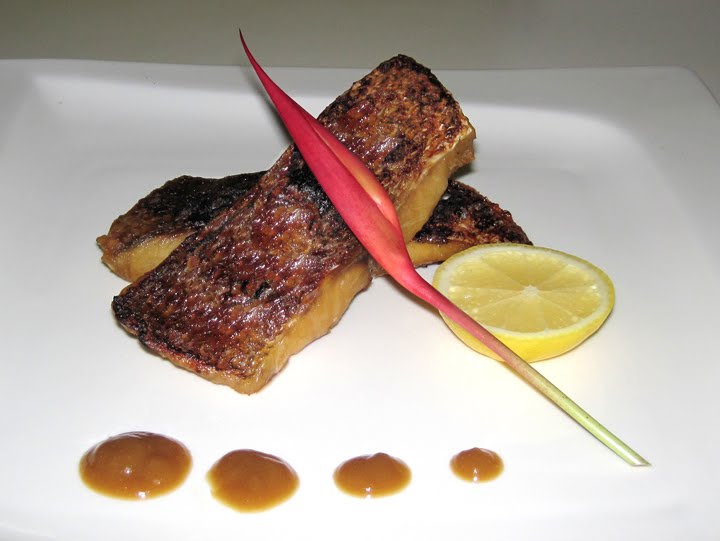
The roasted aroma from a miso coated fish is mouth-watering. Here, the marinade is a paste made of sweet miso, mirin and wine (I used shaoxing wine instead of sake). The fish fillet is coated with the paste and left in the refrigerator for at least 24 hours. It is then wiped off and grilled without oil until the skin is crisp. For the sauce, I reserved a tablespoon of the miso paste and add rice vinegar to taste.